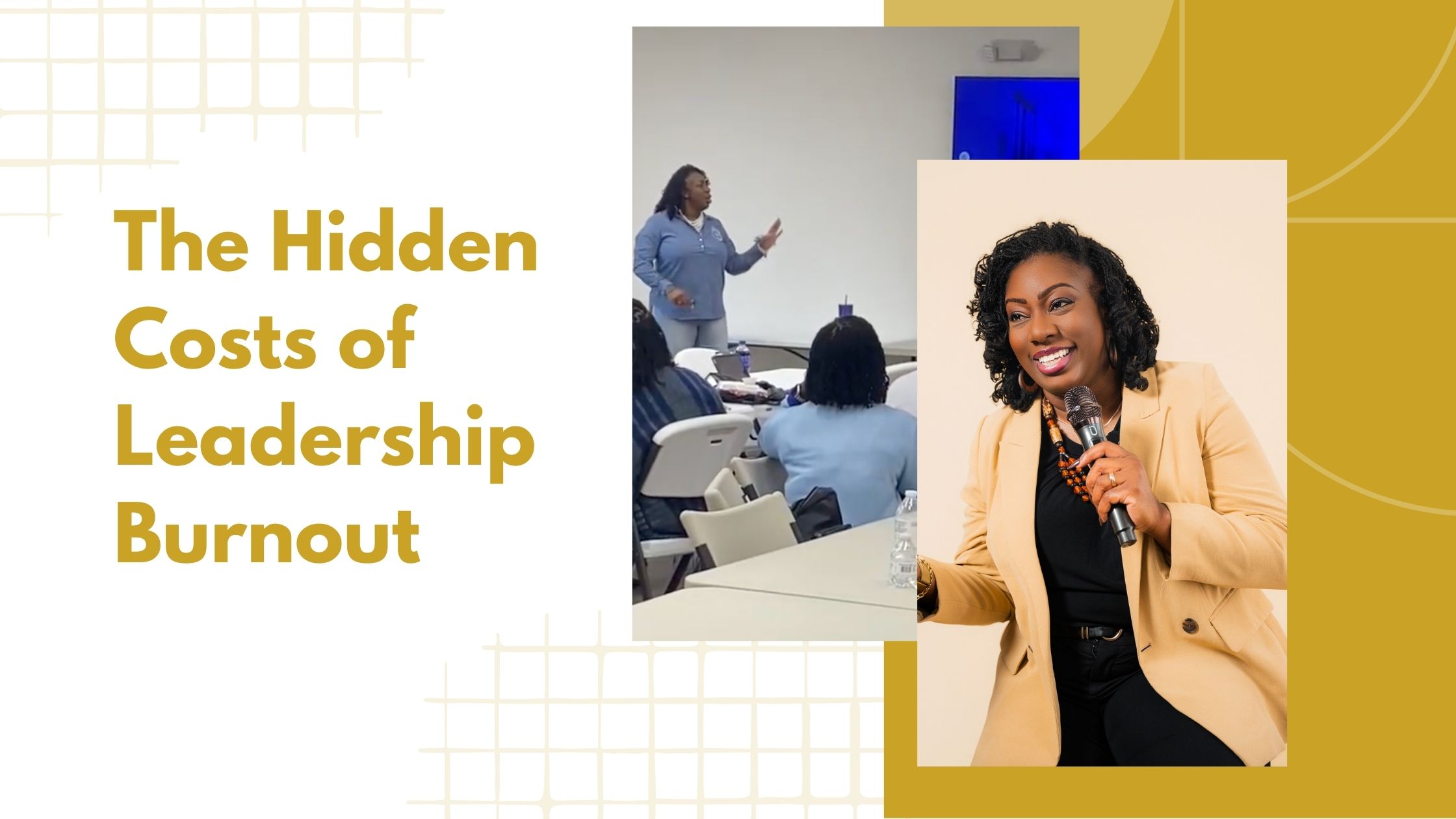
The Hidden Costs of Leadership Burnout
Burnout rarely announces itself. Often times, it does not arrive with a warning label or a single breaking point. Instead, it quietly gains ground, reshaping how teams and leaders show up for themselves and others long before the word burnout is ever spoken.
Burnout is a state of deep physical, emotional, and mental exhaustion. It feels like swimming in a pool, only to realize you are actually in open water with no shoreline in sight. While it is often discussed in the workplace, burnout reaches far beyond it, affecting civic involvement, family life, community engagement, and personal and professional relationships.
At its peak, burnout shows up in recognizable patterns:
Slower decision-making
Shorter patience and emotional reactivity
Increased conflict or miscommunication
Difficulty maintaining trust with teams
Emotional fatigue that dulls motivation
Leaders feeling disconnected from their purpose and strengths
When teams operate from depletion, organizational outcomes suffer, whether through decreased engagement, lower retention and completion rates, or damage to institutional reputation. When leaders operate from depletion, their teams inherit uncertainty. Competing demands, limited resources, heavy workloads, and administrative pressure compound the strain and make balance increasingly difficult to sustain.
The ripple effects are real. Burnout erodes trust, productivity, and culture from the inside out.
This is why conversations about leadership burnout are not optional, they are strategic priorities. Left unaddressed, burnout creates individuals and teams who suffer silently to meet expectations, protect compensation, pursue advancement, or avoid being seen as “the problem.”
The Call to Lead Differently: Leadership today requires more than endurance. It requires intention.
Here are two practical ways leaders can save capacity and serve better:
First, protect decision energy before it’s depleted. Reduce unnecessary decision-making by clarifying priorities, delegating with trust, and creating clear operating rhythms for your team. Fewer reactive decisions preserve mental bandwidth for the moments that truly matter.
Secondly, schedule recovery as deliberately as responsibility. Rest is not a reward, it is a requirement. Build recovery into your calendar through protected focus time, boundary-setting, and moments to pause and reflect. Leaders who recover lead with greater clarity, presence, and confidence.
Burnout is not a personal failure. It is a signal that leadership systems, expectations, and capacity must be recalibrated. The strongest leaders do not lead at the expense of themselves. Rather, they lead in ways that sustain both people and performance.


